Polymesh v8 Is Here: The Biggest Upgrade Since Launch
Polymesh v8 is now live on Mainnet. It's the largest upgrade to the network since launch, and it touches most of the core systems: onboarding, settlement, asset holding, smart contracts, and hardware wallet support. Much of it is aimed at removing long-standing friction for users and developers while keeping the identity and compliance model that Polymesh is built around.
Simpler onboarding
Until now, joining Polymesh meant going through a CDD Provider. You completed identity verification and received a CDD claim before you could do much of anything. In practice this often meant sitting through two onboarding flows: one for the chain, and another for the application or asset you actually wanted to use.
v8 removes the CDD claim requirement. Any account can now register an identity (DID) for itself directly on-chain, with no intermediary involved. CDD Providers have been renamed to DID Registrars, and they still work the way you'd expect: they can onboard identities on behalf of users who want a managed experience, and businesses that need verified-identity workflows can continue to layer those on with claims.
For new users and developers this is a much shorter path onto the network. For institutions, nothing is lost. Registrar-based onboarding is still there for anyone who wants it.
Automatic receiver affirmation
In previous versions, settlement instructions waited on the receiver's affirmation by default. This prevents unwanted transfers, but it adds a step before assets can settle, and it tends to surprise anyone coming from other blockchain ecosystems where transfers simply land in your account.
In v8, receiver affirmation is automatic by default. When assets are sent to you, they settle without you having to approve them first. Workflows that need explicit receiver approval can opt back in on a per-identity basis, which some institutional flows will want to do.
If you build applications on Polymesh, this deserves a close look. Any code that assumes incoming transfers require the receiver's approval should be reviewed.
Assets held directly on accounts
Polymesh has always organized holdings through identity-owned portfolios. In v8, accounts (signing key public addresses) can also hold assets directly, both fungible tokens and NFTs, with no portfolio involved. A new transfer method moves funds between any combination of accounts and portfolios without creating a settlement instruction.
Portfolios remain fully supported and are still the right model for institutional setups that need shared control through secondary keys. Developers can now choose whichever ownership model fits their application.
v8 also adds allowances: an account can authorize another account or a smart contract to move a set amount of its assets within limits it defines. Anyone who has worked with ERC-20 tokens will recognize the approve-and-spend pattern. It makes delegated and contract-driven workflows possible without handing over signing authority.
EVM smart contracts
v8 brings EVM compatibility to Polymesh through a new dual-VM contract engine. Solidity contracts can run either as native PolkaVM bytecode or as standard EVM bytecode in a full EVM environment. A new Ethereum JSON-RPC proxy lets MetaMask, ethers.js, and other standard Ethereum tooling talk to Polymesh contracts directly.
Solidity developers can now build and deploy on Polymesh with the tools they already know. This release lays the groundwork; direct access from contracts to Polymesh's native identity, compliance, and settlement features is a major focus of ongoing development, and we'll share more as that work progresses.
Confidential Assets on Testnet
v8 introduces Confidential Assets, currently on Testnet. They use zero-knowledge proofs to keep the sender, receiver, asset, and amount of a transfer private, while retaining the auditor and mediator controls that regulated markets require.
Confidential Assets are available on Testnet today for experimentation and feedback. They are disabled on Mainnet while development, testing, and auditing continue. We'll publish more on this in the coming weeks.
Better hardware wallet support
v8 adds a metadata-hash-based signing scheme that lets generic signers, including the generic Polkadot Ledger app, decode and display full Polymesh transaction details. Your Ledger can now show you exactly what you're signing, and because verification runs against the runtime's own metadata, it keeps working as the network evolves. The dedicated Polymesh Ledger app is being updated to support the same scheme. Existing accounts and derivation paths continue to work.
Under the hood
v8 also retires several custom components in favor of standard, widely audited Polkadot SDK implementations, including the balances and staking systems. Most users won't notice a difference day to day, but Polymesh now benefits directly from upstream improvements and security review across the broader Polkadot ecosystem, and works better with standard tooling.
What to do next
If you're a user, the easiest way to see the difference is to onboard fresh. Creating an identity and holding an asset is now a much shorter process.
If you're a developer or run infrastructure against the chain, be aware that v8 is a major release with real breaking changes. Call indices, event shapes, and storage layouts have moved. We've published a full migration changelog covering every pallet; start there before you upgrade.
Thank you to everyone who tested, filed issues, and ran nodes on Testnet throughout the v8 cycle. We're looking forward to seeing what you build.
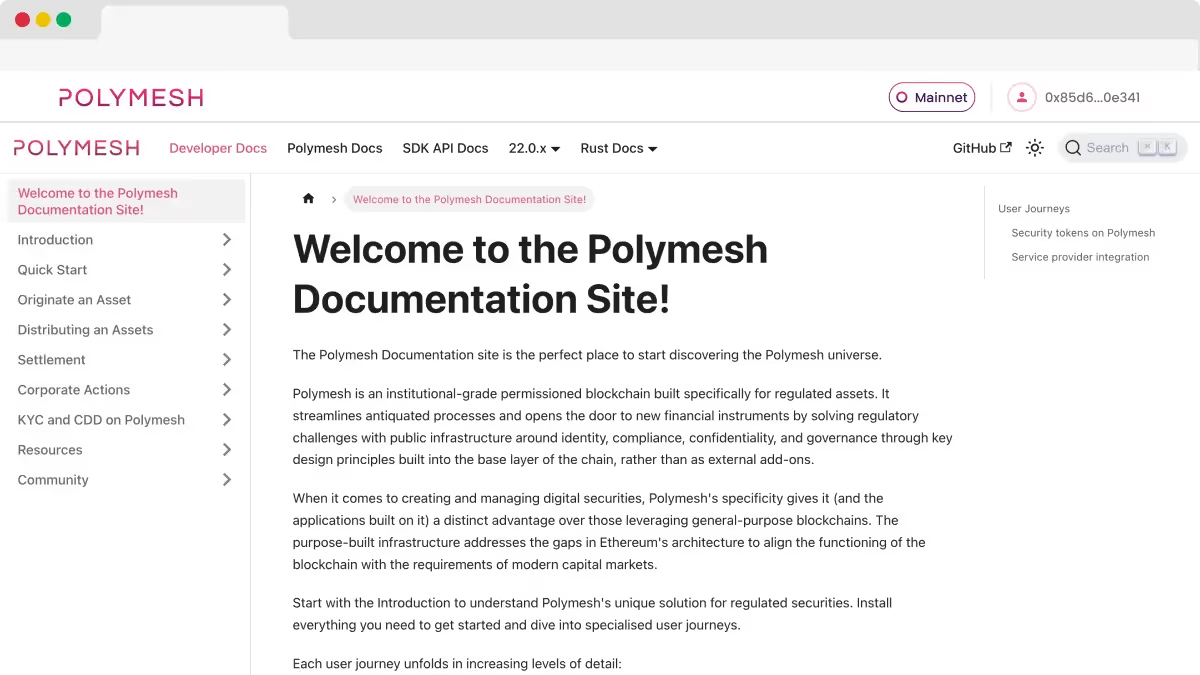
The Polymesh Developer Portal is contains comprehensive documentation, specialized user journeys, and hands-on exercises for building on the purpose-built Polymesh network.